When Are Steel Jacketing Services Preferred Over RCC Jacketing?
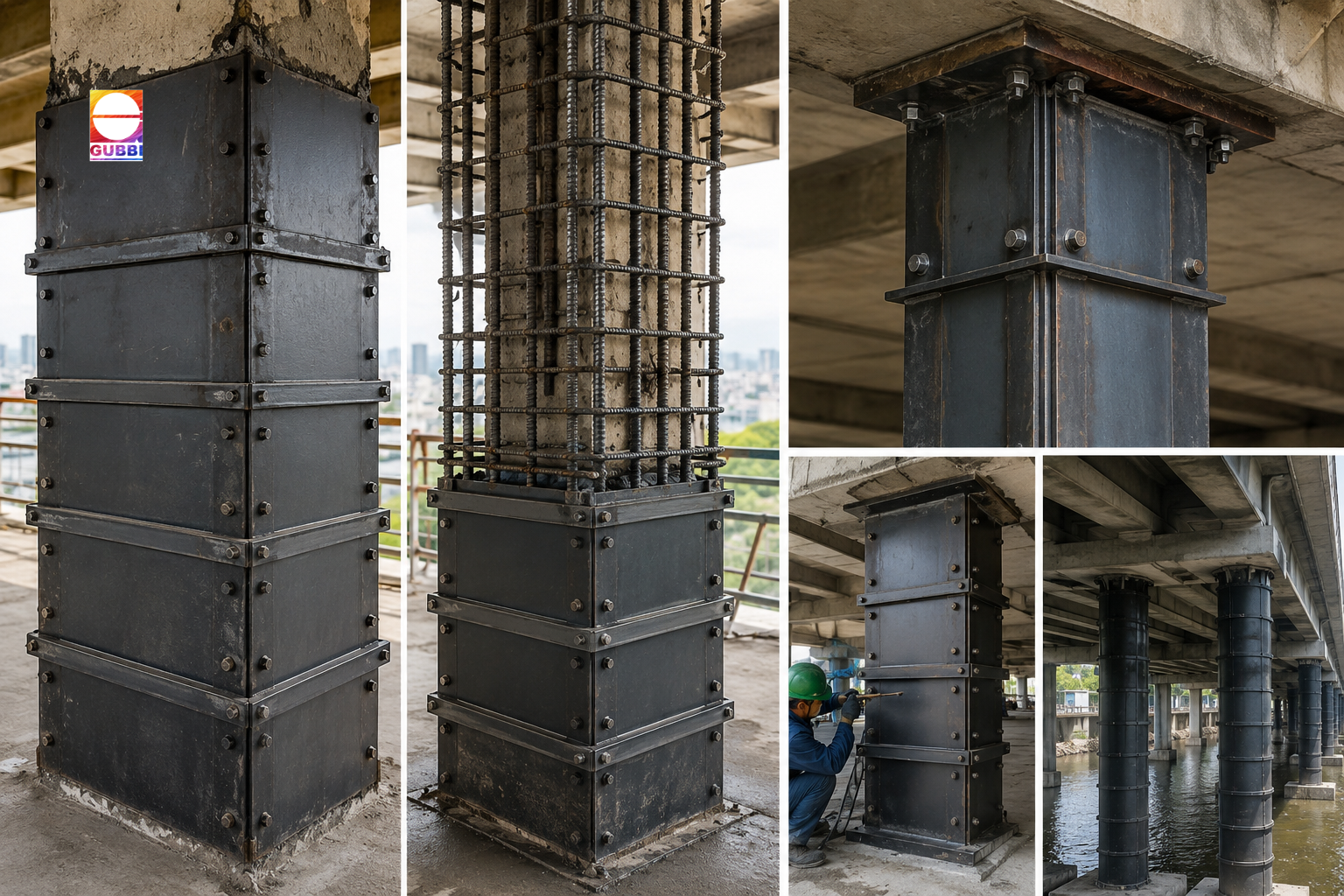
Steel Jacketing Services are often selected when structural strengthening demands high load-carrying capacity, rapid execution, and minimal increase in member dimensions. However, structural rehabilitation is rarely a one-size-fits-all solution. Every deteriorated or underperforming structural member behaves differently depending on its load history, existing distress, space constraints, construction feasibility, and future service requirements. For this reason, experienced structural engineers evaluate multiple strengthening options before determining whether steel jacketing or another strengthening technique is the most technically appropriate solution.
Among the most widely adopted techniques for strengthening reinforced concrete (RCC) columns and other load-bearing members are Steel Jacketing and RCC Jacketing. Both systems improve structural capacity, but they are designed to solve different engineering challenges. Selecting the wrong method can increase project cost, construction duration, and future maintenance requirements while failing to achieve the intended structural performance.
Understanding the Objective of Structural Jacketing
Before selecting a strengthening system, engineers first determine the objective of rehabilitation rather than immediately choosing a repair material.
Typical strengthening objectives include:
- Increasing axial load capacity
- Improving flexural strength
- Enhancing shear resistance
- Restoring seismic performance
- Controlling excessive deformation
- Strengthening columns without major dimensional increase
- Extending structural service life
- Supporting increased operational loads
Once the structural assessment identifies the governing failure mechanism, an appropriate jacketing system is selected.
Steel Jacketing Services vs RCC Jacketing: The Engineering Perspective
Although both techniques strengthen structural members, they behave differently under loading.
| Steel Jacketing | RCC Jacketing |
| Uses fabricated steel plates or structural steel sections | Uses reinforced concrete with additional reinforcement |
| Rapid installation | Longer construction duration |
| Minimal increase in member dimensions | Increases cross-sectional size |
| Immediate structural contribution after installation | Requires curing before full strength develops |
| Suitable where construction space is limited | Suitable where space is available |
| Ideal for heavy industrial strengthening | Common for buildings and infrastructure rehabilitation |
The decision depends on structural requirements, not merely project cost.
When Are Steel Jacketing Services Preferred?
1. When Significant Load Increase Is Required
One of the most common reasons for selecting Steel Jacketing is when the structure must safely carry substantially higher loads than originally designed.
Examples include:
- Installation of heavier industrial machinery
- Additional production floors
- Warehouse conversion
- Increased crane loads
- Expansion of manufacturing facilities
Steel provides high strength with relatively small additional thickness, allowing substantial load enhancement without dramatically enlarging structural members.
2. When Column Dimensions Cannot Be Increased
Many operational facilities cannot accommodate larger column sizes.
Typical examples include:
- Manufacturing plants
- Parking structures
- Warehouses
- Airports
- Metro stations
- Industrial processing units
RCC jacketing increases column dimensions due to additional reinforcement and concrete cover.
Steel jacketing services can achieve comparable strengthening while occupying considerably less space, making it suitable where operational clearances are critical.
3. Fast-Track Rehabilitation Projects
Construction downtime directly affects operational revenue.
Industries often require rehabilitation during:
- Planned shutdowns
- Weekend maintenance
- Annual overhauls
- Limited production stoppages
Unlike RCC jacketing, steel jacketing eliminates concrete curing periods. Once fabrication, positioning, welding, bolting, and grouting are completed, the strengthened member becomes operational much sooner.
For facilities where every day of downtime results in production losses, steel jacketing is frequently the preferred engineering solution.
4. Strengthening Existing Industrial Structures
Industrial structures experience demanding loading conditions throughout their service life.
These include:
- Dynamic equipment loads
- Repeated vibration
- Fatigue loading
- Impact loading
- Elevated operational temperatures
Steel jackets provide excellent confinement and stiffness, making them particularly effective for strengthening industrial RCC columns subjected to continuous operational stresses.
5. Seismic Retrofitting Applications
In seismic rehabilitation projects, improving ductility is often as important as increasing strength.
Steel jackets help by:
- Providing confinement to concrete
- Delaying brittle failure
- Improving energy dissipation
- Enhancing ductile behaviour
- Increasing overall structural resilience during earthquakes
For existing buildings requiring seismic upgrades without extensive demolition, steel jacketing services are widely adopted.
6. Severely Damaged RCC Columns
Columns affected by:
- Reinforcement corrosion
- Concrete spalling
- Section loss
- Impact damage
- Fire damage
may require strengthening beyond what conventional repair mortars can provide.
After appropriate repair of deteriorated concrete and corrosion treatment, steel jackets can restore confinement and significantly improve the load-carrying capacity of compromised members.
7. Heavy Infrastructure Rehabilitation
Large infrastructure assets often demand strengthening systems capable of resisting substantial forces.
Steel jacketing is commonly used in:
- Bridges
- Flyovers
- Railway structures
- Marine structures
- Industrial foundations
- Port facilities
These projects frequently require high structural reliability under demanding loading conditions where steel offers considerable advantages.
Engineering Factors Considered Before Selecting Steel Jacketing
Professional structural consultants never recommend a strengthening technique based solely on visual inspection.
A detailed engineering assessment generally includes:
Structural Capacity Assessment
Existing member capacity is compared with future design loads.
Material Investigation
Engineers evaluate:
- Concrete compressive strength
- Reinforcement condition
- Corrosion extent
- Carbonation depth
- Chloride contamination
Structural Analysis
Finite element modelling or structural analysis helps determine:
- Axial stresses
- Bending moments
- Shear demand
- Load redistribution
- Critical failure modes
Constructability Review
Practical considerations include:
- Working space
- Accessibility
- Equipment availability
- Fabrication feasibility
- Welding access
- Operational constraints
Service Life Expectations
The selected strengthening system should provide reliable long-term performance with appropriate corrosion protection and maintenance planning.
Advantages of Steel Jacketing Services
Properly designed and executed steel jacketing offers several technical benefits.
High Strength-to-Size Ratio
Steel provides significant structural strengthening without substantially increasing member dimensions.
Reduced Construction Time
Fabricated steel components enable faster installation and shorter rehabilitation schedules.
Immediate Structural Performance
Unlike concrete-based systems, steel jackets do not require extended curing before contributing to structural capacity.
Suitable for Congested Locations
Steel jackets can often be installed in confined areas where RCC jacketing becomes difficult.
Excellent Structural Confinement
Steel confinement improves the behaviour of existing concrete under compression and enhances overall member performance.
Adaptability
Steel jacketing can be customised for columns, bridge piers, industrial supports, and other structural elements based on project-specific requirements.
Challenges That Must Be Addressed
Like any strengthening system, steel jacketing services require careful detailing.
Important engineering considerations include:
- Corrosion protection systems
- Proper welding procedures
- Accurate fabrication tolerances
- High-quality grouting between steel and concrete
- Adequate connection detailing
- Inspection and quality assurance during installation
Ignoring these aspects can significantly reduce long-term performance.
Why Structural Assessment Comes Before Jacketing Selection?
Choosing between steel and RCC jacketing should never be based on convenience or familiarity alone.
A comprehensive structural assessment identifies:
- Existing structural deficiencies
- Load requirements
- Future usage changes
- Remaining service life
- Environmental exposure
- Rehabilitation objectives
Only after these evaluations can engineers determine whether Steel Jacketing is the most technically appropriate strengthening solution or whether RCC jacketing or another strengthening method, such as FRP wrapping, is better suited to the structure.
What is the primary advantage of Steel Jacketing over RCC Jacketing?
Steel jacketing provides high structural strength with minimal increase in member dimensions, making it suitable for space-constrained and heavily loaded structures.
Can Steel Jacketing be used for seismic strengthening?
Yes. Steel jacketing improves confinement, ductility, and energy dissipation, making it an effective solution for seismic retrofitting of existing RCC structures.
Is Steel Jacketing suitable for industrial buildings?
Yes. It is widely used in industrial facilities, warehouses, power plants, bridges, and infrastructure projects where high load capacity and reduced downtime are critical.
Does Steel Jacketing Services replace damaged concrete?
No. Damaged concrete should first be repaired, loose material removed, reinforcement treated, and structural defects addressed before installing the steel jacket.
How do engineers decide between Steel Jacketing and RCC Jacketing?
The decision is based on structural analysis, load requirements, available space, construction constraints, service-life expectations, and the overall rehabilitation objectives of the project.
Conclusion
Steel Jacketing Services are typically preferred when projects require high structural strength, rapid construction, minimal increase in member dimensions, or rehabilitation of heavily loaded industrial and infrastructure assets. Their ability to deliver significant strength enhancement with limited sectional enlargement makes them particularly valuable in operational facilities where downtime and space constraints are major considerations.
However, no jacketing system is universally superior. The most effective rehabilitation strategy is always based on a detailed structural investigation, engineering analysis, and project-specific performance requirements. Selecting the appropriate strengthening technique ensures improved safety, extended service life, and reliable long-term structural performance.