steel column jacketing structural retrofitting india for rcc column strengthening and seismic performance

Steel Jacketing of Columns for Industrial and Seismic Strengthening

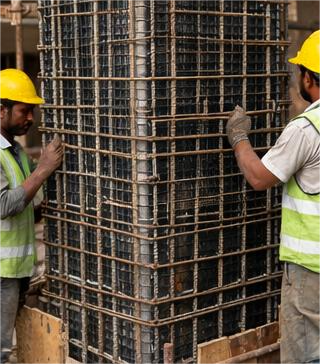
Steel Jacketing is ideal for industrial facilities and time-sensitive strengthening projects.. This method encases existing columns with steel plates or sections to rapidly enhance load-carrying capacity, stiffness, and ductility with minimal size increase.

What is Steel Jacketing of Columns?

A column jacketing technique where steel plates or sections are added around RCC columns to increase strength, improve load capacity, and enhance structural stability. It provides strong confinement, improving axial strength and seismic performance.

When Is Steel Jacketing Preferred?

  • Heavy increase in axial or lateral loads
  • Seismic retrofitting of deficient columns
  • Industrial structures with high load demands
  • Fast-track strengthening requirements
  • Sites where RCC jacketing is not feasible due to space constraints

Types of Steel Jacketing Systems

  • Steel plate encasement
  • Angle and channel jacketing
  • Built-up steel section encasement

The system is selected based on load requirements, site conditions, and structural design.

Key Structural Benefits of Steel Jacketing

  • High strength-to-weight ratio
  • Minimal increase in column size
  • Rapid execution (no curing delay)
  • Excellent seismic performance
  • Effective for heavy-load applications

Applications of Steel Jacketing

  • Industrial plants and factories
  • Warehouses and heavy-duty structures
  • Power plants and refineries
  • Seismic retrofitting of RCC buildings
  • Infrastructure and utility structures
Frequently Asked Questions

Steel jacketing is required when columns show cracks, corrosion, reduced load capacity, or structural weakness due to aging, overload, or seismic damage.

Steel jacketing improves load-bearing capacity, enhances ductility, provides confinement to concrete, repairs damaged columns, and increases overall structural safety.

Steel jacketing offers faster installation, higher strength, and better confinement, while concrete jacketing is more economical for large sections. The choice depends on structural needs.

Steel plates or sections confine the concrete core, reduce lateral expansion, and improve axial load capacity, resulting in stronger and more durable columns.

With proper design and corrosion protection, steel jacketing can last for decades, providing long-term reinforcement and durability to RCC columns.

Column jacketing is a general strengthening method, while steel jacketing is a specific type that uses steel to reinforce and protect columns.

The thickness depends on structural design requirements, but typically ranges from 6 mm to 12 mm or more based on load and damage conditions.

Get Expert Steel Jacketing Services

Contact our structural experts for customized steel plate jacketing solutions designed for industrial and seismic applications.