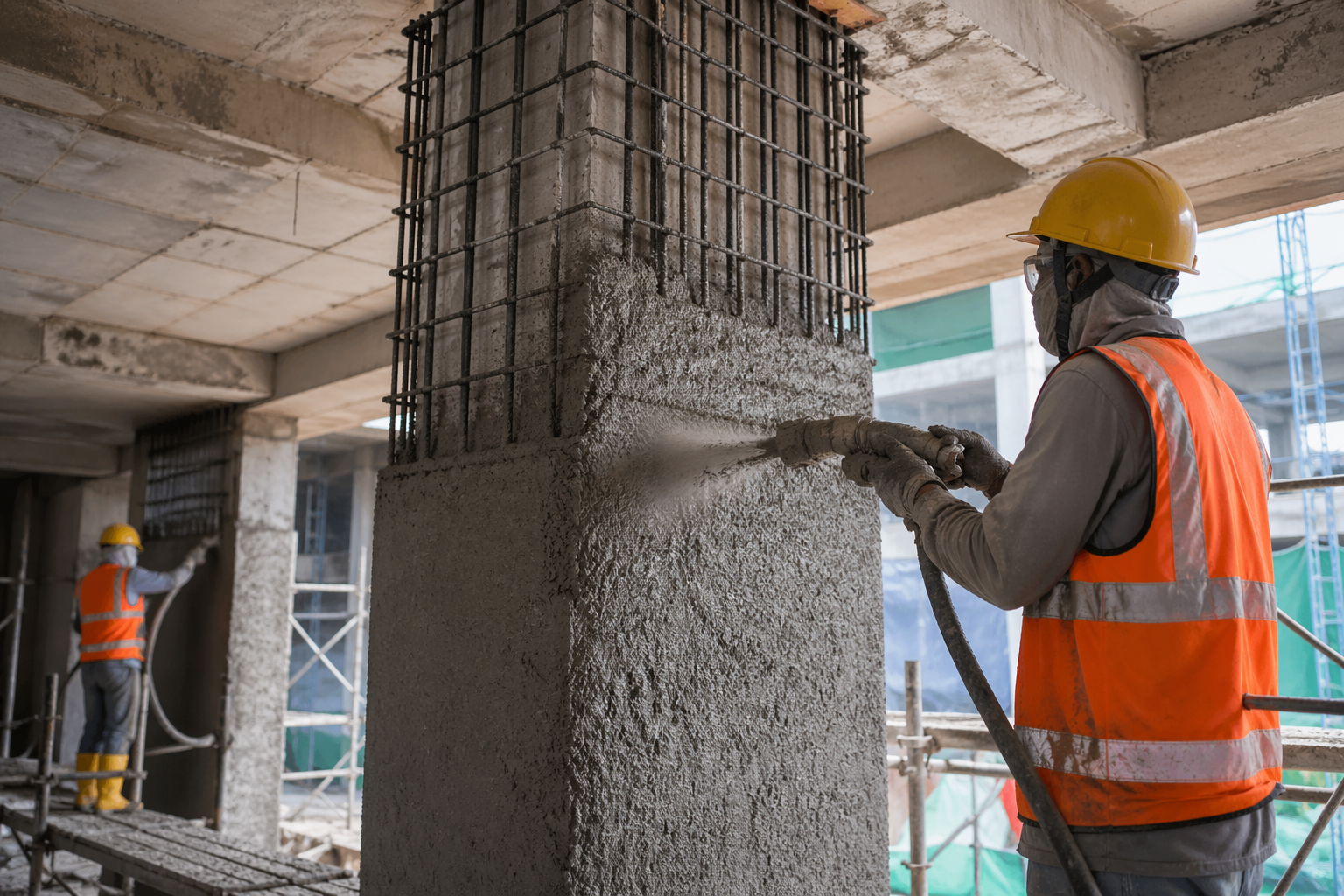
What is Shotcrete Jacketing of Column?
Shotcrete jacketing is a strengthening process where concrete or mortar is pneumatically sprayed at high velocity onto an existing column surface. This creates a dense, well-compacted layer that bonds strongly with the old concrete.
The process includes:
- Surface preparation and removal of loose concrete
- Installation of shear connectors/dowel bars
- Fixing reinforcement mesh or steel cages
- Application of shotcrete (wet-mix or dry-mix)
- Layer-by-layer build-up to required thickness
The result is a monolithic, high-strength composite section that significantly enhances load capacity and durability.
When is Shotcrete Jacketing Required?
Shotcrete jacketing is recommended in the following situations:
- Increase in structural loads or additional floors
- Seismic retrofitting of RCC buildings
- Deterioration due to corrosion, cracks, or spalling
- Limited space where conventional jacketing is not feasible
- Repair of irregular or damaged column surfaces
- Fast-track strengthening projects
Early intervention helps prevent structural failure and costly repairs.
Key Structural Benefits of Shotcrete Jacketing
Load Capacity Enhancement
- Increased axial load-carrying capacity
- Improved flexural and shear strength
- Better stress distribution
Superior Bonding and Compaction
- High-velocity spraying ensures excellent adhesion
- Dense concrete with minimal voids
- Reduced risk of honeycombing
Seismic Performance Improvement
- Enhanced confinement of core concrete
- Improved ductility and energy absorption
- Better resistance during earthquake loading
Durability and Protection
- Reduced permeability and moisture ingress
- Protection against corrosion
- Increased resistance to environmental exposure
- Extended service life of structure
Advantages of Shotcrete Jacketing
- Faster application compared to conventional methods
- Ideal for confined and hard-to-access areas
- Minimal formwork requirement
- High-quality compaction and uniform thickness
- Suitable for complex or irregular surfaces
- Reduced downtime for operational buildings
Limitations of Shotcrete Jacketing
- Requires skilled applicators and proper equipment
- Quality control is critical during application
- Slight rebound loss of material during spraying
- Proper curing is essential for long-term performance
Applications of Shotcrete Column Jacketing
- Residential and commercial buildings
- Industrial structures and plants
- Parking structures and basements
- Bridges and infrastructure projects
- Seismic retrofitting works
- Repair of distressed RCC columns