How Column Jacketing Helps Restore Damaged Buildings
Column Jacketing | Structural Strengthening Solutions for RCC Columns
In aging buildings and stressed RCC structures, column failure is often the most critical risk factor. Cracks, corrosion of reinforcement, reduced load capacity, or seismic distress can compromise the entire structural system.
Column jacketing has emerged as one of the most dependable structural strengthening and rehabilitation solutions used by civil engineering professionals to restore safety without full demolition.
As a structural repair service provider, we apply column jacketing techniques to reinforce weakened columns and extend the service life of commercial, and industrial buildings.
Restoring Safety in Damaged RCC Structures
Most structural failures begin at the column level. Over time, RCC columns are exposed to:
- Continuous load stress beyond design limits
- Water seepage leading to steel corrosion
- Poor construction quality or aging materials
- Earthquake-induced micro and macro cracks
- Unauthorized modifications increasing load demand
When these issues appear, the structure does not always require reconstruction. In many cases, RCC column jacketing provides a reliable restoration method.
How Column Jacketing Works on Site?
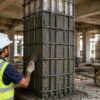
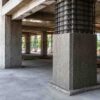
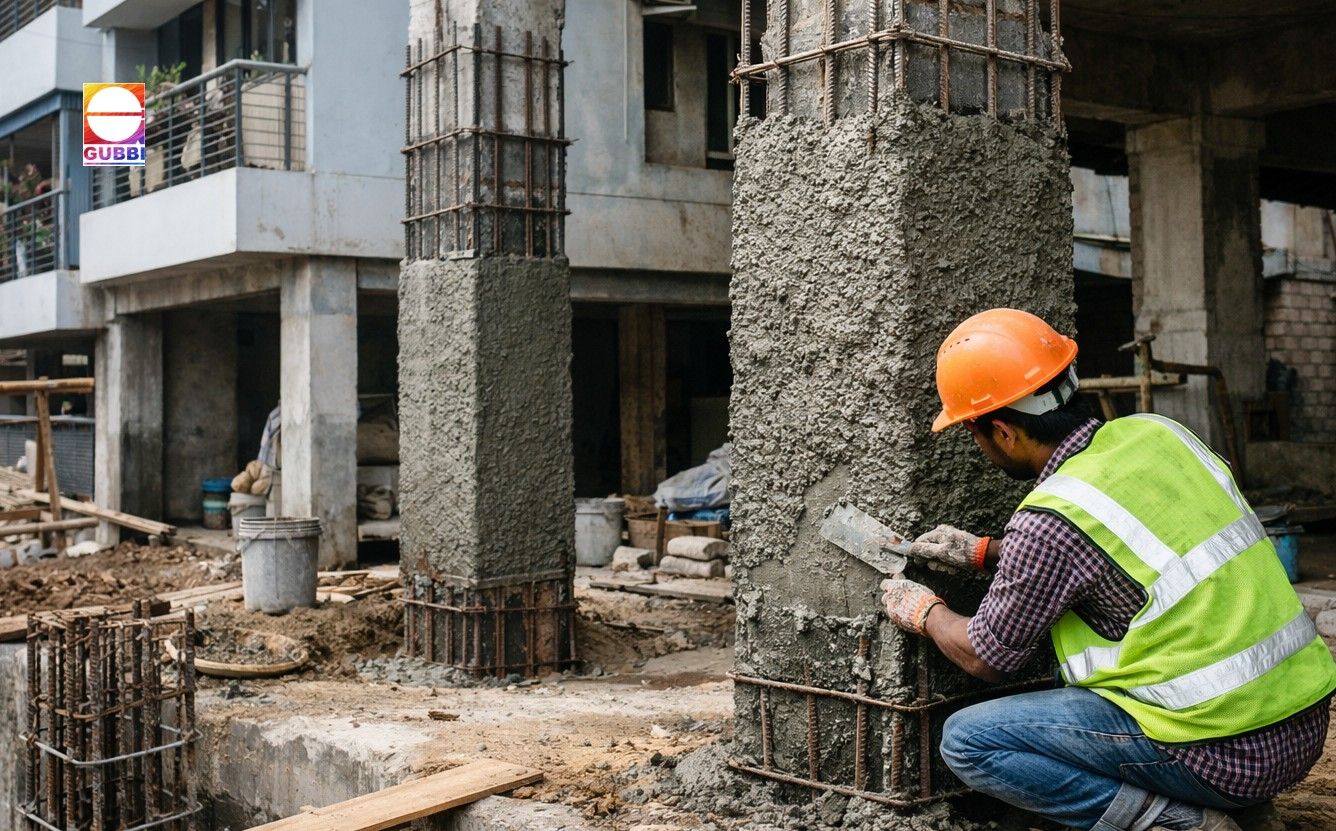
Column jacketing is executed as a controlled strengthening intervention where the existing structural member is enhanced with additional load-bearing material.
In practical field execution, the process focuses on:
- Restoring lost structural capacity of the column
- Improving confinement of existing concrete core
- Enhancing ductility for seismic resistance
- Re-establishing safe load transfer to foundations
This makes it a widely used method in structural retrofitting projects and structural rehabilitation works.
Where Column Jacketing Becomes Essential?
From our site experience, jacketing is typically required in:
- Buildings showing visible column cracking or spalling
- RCC structures affected by reinforcement corrosion
- Structures weakened due to seismic activity
- Buildings converted from residential to commercial use
- Old structures nearing the end of their design life
Early identification and intervention help prevent progressive structural failure.
Structural Strengthening Approach We Follow
Every building behaves differently, so column jacketing is not a one-size solution. Our approach is based on structural condition assessment and load evaluation.
On-site strengthening strategy generally includes:
- Structural inspection and distress mapping
- Load assessment based on current building usage
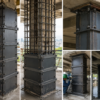
- Selection of suitable jacketing system (RCC / steel / composite)
- Surface preparation and defect correction
- Reinforcement enhancement and confinement detailing
- Controlled concreting and curing for durability
This ensures the strengthened column performs as a fully restored structural element, not just a repaired surface.
Why Column Jacketing Is Preferred in Building Rehabilitation?
Compared to demolition or full reconstruction, column jacketing offers a more practical engineering solution:
- Restores structural stability without rebuilding
- Cost-effective compared to reconstruction projects
- Minimal disruption to existing occupancy
- Enhances seismic safety performance
- Extends overall building lifespan significantly
For many RCC structures, it becomes the most efficient route for structural repair and rehabilitation services.
Role of Professional Structural Repair Contractors
Column jacketing requires precision engineering, not just construction work. The success of the system depends on:
- Accurate damage diagnosis
- Proper structural detailing
- Material selection and bonding quality
- Load transfer integrity
- On-site execution control
We ensure that every strengthening work is aligned with structural safety requirements and long-term durability expectations.
Conclusion
Column jacketing is not just a repair technique, it is a structural restoration solution that brings damaged RCC buildings back into safe working condition. For structures affected by aging, corrosion, or overloading, it provides a reliable way to regain strength without full reconstruction.
With the right engineering approach, column jacketing services can significantly extend the life and performance of existing buildings, making it one of the most trusted methods in modern structural rehabilitation.
Need Expert Column Jacketing Services?
Restore weakened RCC columns with professional structural strengthening and rehabilitation solutions. Our team helps improve load-bearing capacity, structural stability, and long-term building durability through precision-engineered column jacketing work.
Contact Gubbi Civil Engineers for expert structural repair solutions.