Seismic Retrofitting Using Column Jacketing Services
Seismic Retrofitting has become an essential engineering intervention for existing RCC buildings that were designed under older seismic codes, have undergone structural modifications, or no longer satisfy present-day earthquake performance requirements. Rather than replacing the entire structure, seismic retrofitting enhances the building’s ability to resist lateral forces by strengthening critical structural members responsible for stability during earthquake loading.
Among the available retrofit techniques, Column Jacketing Services are widely adopted to improve the load-carrying capacity, ductility, and overall seismic performance of reinforced concrete columns, making them a key component of modern structural rehabilitation projects.
The Role of Columns During an Earthquake
During seismic excitation, columns are subjected to simultaneous axial compression, bending moments, and shear forces that reverse direction repeatedly throughout the duration of the earthquake. Unlike gravity loading, seismic loading demands ductile behaviour, allowing structural members to deform without sudden loss of strength.
Many older RCC buildings contain columns with inadequate confinement reinforcement, insufficient shear capacity, poor reinforcement detailing, or dimensions that are no longer adequate under present seismic demand. These deficiencies reduce energy dissipation capacity and increase the likelihood of brittle failure.
For this reason, seismic retrofitting projects frequently prioritize strengthening columns before upgrading other structural members.
Why Column Jacketing Is Preferred in Seismic Retrofitting?
The objective of seismic retrofitting is not merely to increase strength but to improve the overall behaviour of the structural frame during cyclic loading.
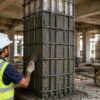
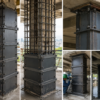
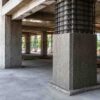
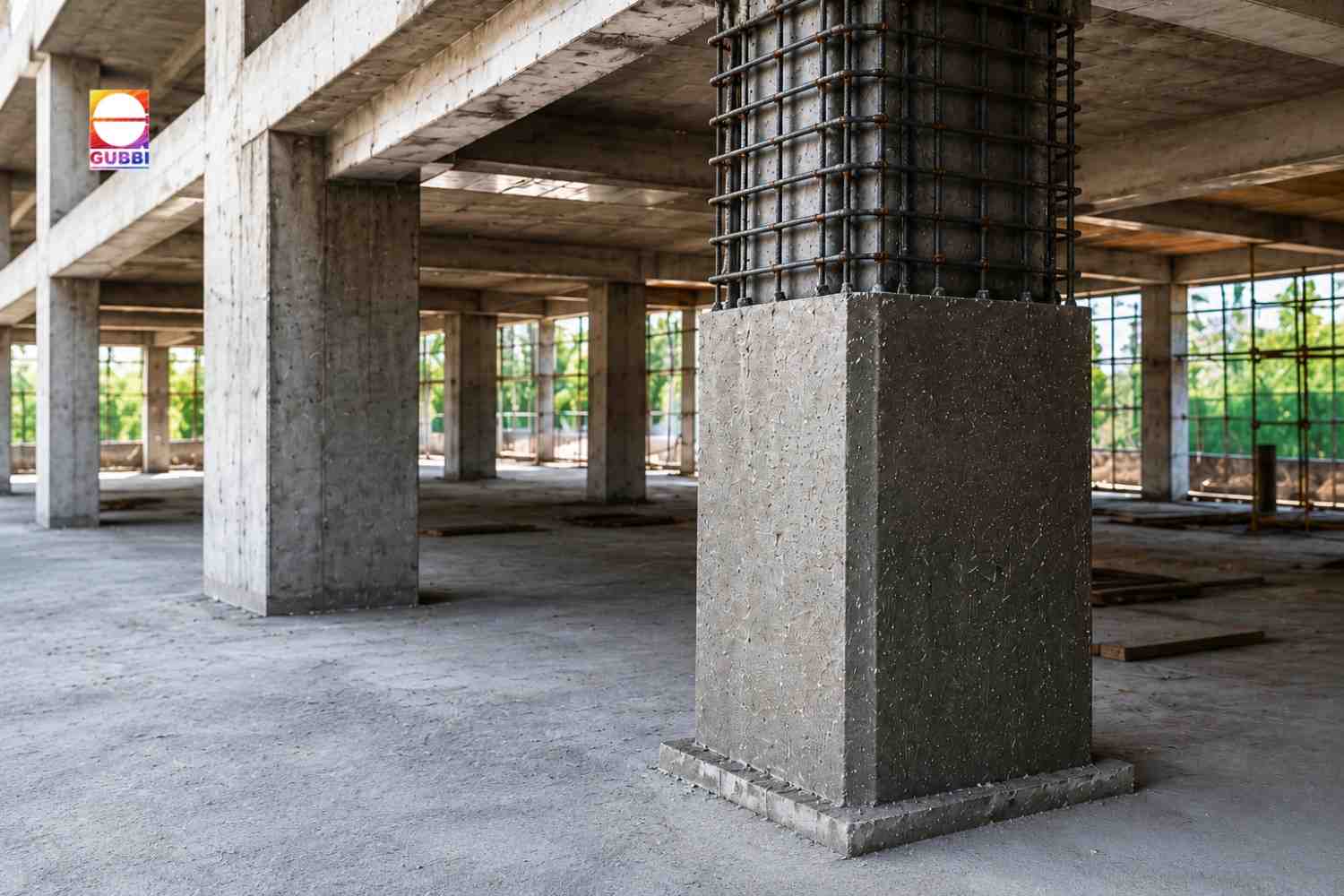
Column jacketing achieves this by enlarging the existing column section and integrating additional longitudinal reinforcement and closely spaced transverse ties around the original member. The strengthened section behaves as a composite element capable of resisting higher axial loads, bending moments, and shear forces while providing significantly improved confinement to the concrete core.
Unlike localized crack repairs, column jacketing modifies the structural response of the building, allowing the frame to sustain earthquake-induced deformation with greater stability and ductility.
Engineering Considerations Before Selecting Column Jacketing
Column jacketing should be adopted only after evaluating the structural deficiencies identified during a seismic assessment. The decision depends on how the building performs under seismic analysis rather than on visible deterioration alone.
Engineers typically examine:
- Existing column capacity versus seismic demand
- Axial load ratio under revised loading conditions
- Shear deficiencies and confinement requirements
- Beam-column joint performance
- Storey drift and lateral displacement
- Foundation capacity to accommodate increased column forces
- Structural irregularities influencing load distribution
The retrofit design must ensure that strengthening one component does not unintentionally transfer excessive forces to weaker members elsewhere in the structure.
Structural Detailing Determines Retrofit Performance
The effectiveness of column jacketing depends heavily on engineering detailing.
Proper detailing includes adequate anchorage between existing and new concrete, reliable shear connectors, correctly designed reinforcement cages, compatible repair materials, and sufficient confinement reinforcement. Special attention is also required at beam-column joints to ensure force transfer across the strengthened frame.
Poor detailing can reduce composite action and compromise the intended seismic performance, regardless of the amount of additional concrete or reinforcement provided.
Construction Quality Is Critical
Execution quality has a direct influence on the performance of a retrofitted column during future earthquakes.
Surface preparation, removal of unsound concrete, reinforcement corrosion treatment, installation of dowels, placement of reinforcement, use of non-shrink micro-concrete, and controlled curing all contribute to achieving the designed structural behaviour.
Since column jacketing modifies primary load-carrying members, construction should always be carried out under the supervision of experienced structural rehabilitation engineers.
Where Seismic Column Jacketing Is Commonly Applied?
Column jacketing is widely used in seismic upgrading projects involving:
- Existing commercial buildings
- Industrial plants and manufacturing facilities
- Hospitals and healthcare buildings
- Educational institutions
- Residential apartment complexes
- Warehouses and logistics facilities
- Government buildings
- Buildings undergoing vertical expansion
- Structures requiring compliance with updated seismic design requirements
The technique is particularly valuable where continued use of the building is preferred over demolition and reconstruction.
Column Jacketing as Part of an Integrated Seismic Retrofit
In many projects, column jacketing forms one component of a broader seismic strengthening strategy. Depending on the structural analysis, it may be combined with beam strengthening, shear wall construction, steel bracing, foundation strengthening, FRP systems, or beam-column joint rehabilitation.
Selecting the appropriate combination requires a building-specific engineering assessment rather than adopting a single strengthening method for every structure.
Conclusion
Seismic retrofitting is fundamentally about improving structural performance under earthquake loading, not simply increasing member size. Column Jacketing Services remain one of the most dependable engineering solutions for strengthening deficient RCC columns, enhancing ductility, and improving the overall seismic response of existing buildings.
When supported by detailed structural assessment, code-compliant design, and quality-controlled execution, rcc column jacketing enables aging structures to achieve significantly higher levels of safety, resilience, and long-term serviceability without the cost and disruption associated with complete reconstruction.