Micro Concrete Column Jacketing for Structural Repair
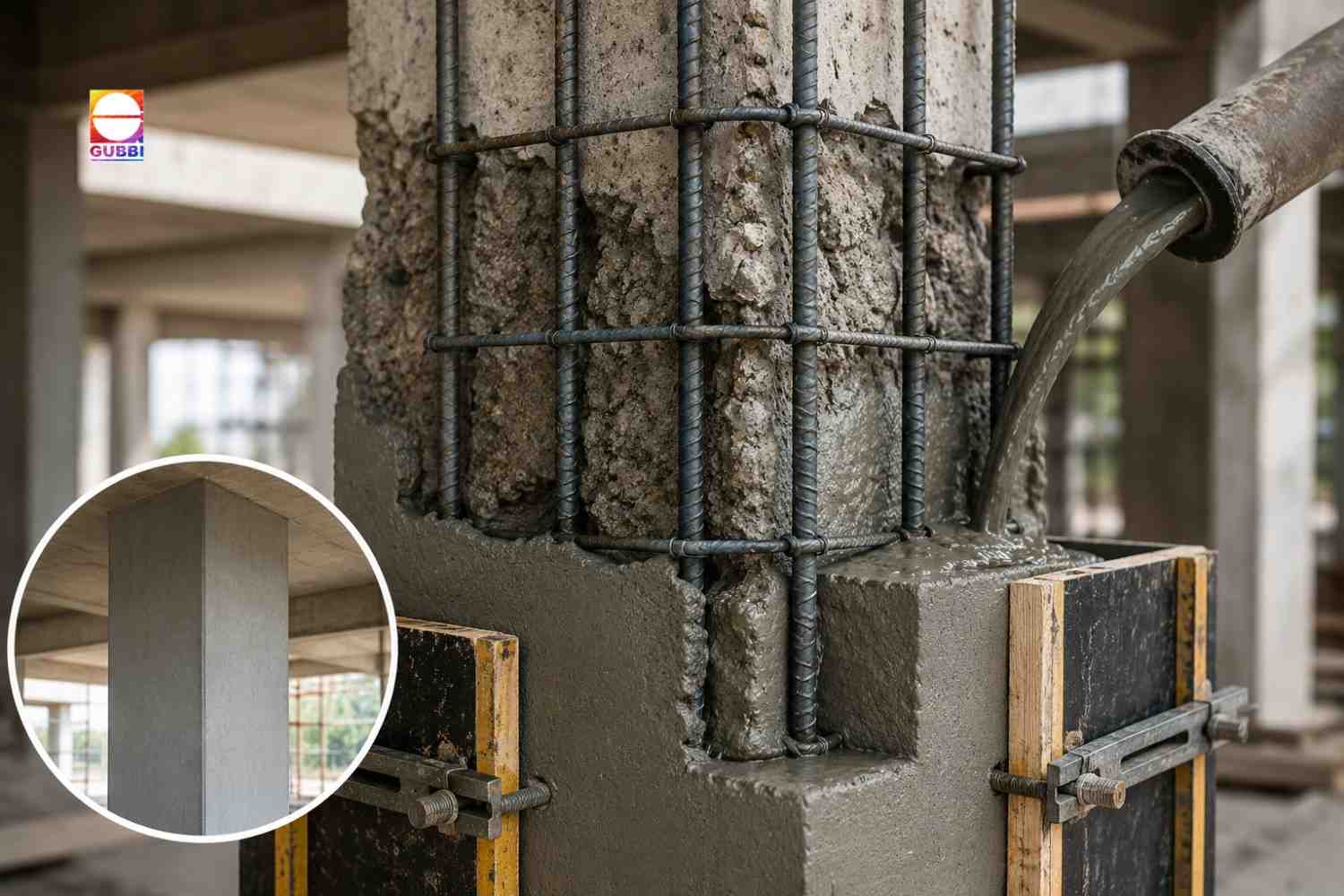
Micro Concrete Column Jacketing is a highly effective structural repair and strengthening solution for reinforced concrete columns affected by deterioration, inadequate load capacity, poor concrete quality, reinforcement corrosion, seismic deficiencies, or changes in building usage. Unlike conventional concrete jacketing, this method uses high-flow, non-shrink micro concrete to create a dense and durable jacket around the existing column with controlled placement and reliable bonding.
For buildings where column dimensions, reinforcement detailing, access restrictions, and operational continuity are critical considerations, Micro Concrete Jacketing provides a practical approach to restoring structural performance without requiring extensive demolition or major reconstruction.
Why Existing Columns Require Strengthening?
Reinforced concrete columns are primary load-bearing members that transfer gravity loads and lateral forces safely to the foundation. Any reduction in their strength, stiffness, ductility, or confinement capacity can directly affect the overall safety of the structure.
Column strengthening may become necessary due to:
- Concrete spalling and delamination caused by reinforcement corrosion
- Honeycombing, poor compaction, or low-grade original concrete
- Cracks caused by overloading, settlement, impact, or seismic action
- Increased loads due to additional floors, machinery, storage, or change in occupancy
- Inadequate column size or reinforcement as per current design requirements
- Fire exposure and loss of concrete strength
- Seismic retrofitting requirements for older buildings
- Damage caused by water ingress, chemical exposure, or poor drainage conditions
In such cases, repair limited to patching damaged concrete may not be sufficient. The structural engineer must determine whether the column requires capacity enhancement, improved confinement, or restoration of the load-transfer mechanism. This is where Micro Concrete Column Jacketing becomes an engineered strengthening solution rather than a superficial repair treatment.
What Makes Micro Concrete Suitable for Column Jacketing?
Micro concrete is a pre-packed, cementitious, high-strength, non-shrink repair material designed for placement in restricted sections where conventional concrete cannot be compacted effectively. It is particularly suitable for jacketing applications because the gap between the old column and new jacket reinforcement is often narrow and congested.
The material is generally selected for its ability to provide:
- High flowability for placement in confined jacketing zones
- Low shrinkage characteristics to reduce debonding and cracking risk
- High early and long-term compressive strength
- Dense microstructure with improved durability
- Better penetration around reinforcement and interfaces
- Compatibility with repair mortar, bonding agents, and corrosion protection systems
- Reduced dependence on mechanical vibration in congested areas
The success of Micro Concrete Column Jacketing depends not only on the material strength but also on substrate preparation, reinforcement detailing, interface treatment, formwork integrity, placement control, and curing discipline.
Condition Assessment Before Jacketing Works
Before executing any column strengthening work, a detailed structural condition assessment is essential. The existing condition of the member must be understood before deciding the jacket thickness, reinforcement arrangement, material grade, and connection detailing.
A typical assessment programme may include:
- Visual inspection and crack mapping
- Measurement of column dimensions and alignment
- Rebound hammer testing and ultrasonic pulse velocity testing
- Core extraction and compressive strength testing where required
- Half-cell potential testing for corrosion assessment
- Cover meter survey to identify existing reinforcement
- Carbonation depth and chloride contamination assessment
- Load review and structural analysis
- Evaluation of foundation adequacy for increased column loads
- Assessment of beam-column joints and slab-column connections
The strengthening design should consider the actual condition of the column, not only original drawings. In older structures, deviations in reinforcement placement, concrete quality, member dimensions, and construction practices are common.
Typical Execution Sequence for Micro Concrete Column Jacketing
A technically controlled execution sequence is essential to ensure that the jacket acts integrally with the existing column. The following process is commonly adopted for Micro Concrete Column Jacketing.
1. Load Relief and Temporary Support
Where the column is carrying significant live or dead loads, temporary shoring or load redistribution may be required before repair work begins. The requirement depends on the extent of damage, structural configuration, and strengthening design.
Load relief must be planned by the structural consultant to avoid distress in adjacent beams, slabs, walls, or foundations.
2. Removal of Unsound Concrete
All loose, weak, cracked, carbonated, and delaminated concrete is removed using controlled mechanical methods. The surface should be prepared until sound concrete is exposed.
Care must be taken to avoid unnecessary damage to the remaining core concrete and existing reinforcement. Sharp edges are typically roughened or chamfered to improve jacket continuity and reduce stress concentration.
3. Reinforcement Treatment and Corrosion Protection
Exposed reinforcement is cleaned to remove rust, scale, loose corrosion products, and contaminants. If the existing bars have suffered significant section loss, additional reinforcement or replacement detailing may be required as per the structural design.
A suitable corrosion protection coating may be applied before jacketing. However, coating selection must be compatible with the repair system and should not reduce the bond between steel, old concrete, and the new micro concrete jacket.
4. Surface Roughening and Bond Preparation
The old concrete surface must be roughened to create a mechanical key between the existing column and the jacket. Smooth surfaces can lead to interface slip, which reduces the composite action expected from the strengthening system.
Depending on the repair specification, the interface may also require:
- Saturated surface dry condition before placement
- Cementitious bonding slurry
- Polymer-modified bonding coat
- Shear connectors or dowels
- Epoxy bonding agent in specific dry-interface applications
The selected method should be based on design requirements and site conditions rather than applying bonding agents as a routine practice.
5. Fixing Additional Reinforcement
New longitudinal bars and closely spaced stirrups are installed around the existing column as per approved structural drawings. Reinforcement detailing is one of the most important elements of the jacketing system.
The design must address:
- Development length and anchorage of longitudinal bars
- Connection of jacket reinforcement with foundation or pedestal
- Continuity at beam-column junctions
- Stirrups spacing for confinement and shear resistance
- Clear cover requirements
- Lap length and coupler requirements
- Reinforcement congestion near joints
- Dowel anchoring into existing members where required
Micro Concrete Column Jacketing is only as reliable as its reinforcement detailing. A high-strength repair material cannot compensate for inadequate anchorage, poor confinement, or discontinuous load paths.
6. Formwork Installation
Leak-proof and rigid formwork is installed around the column to create the required jacket thickness. Since micro concrete is highly flowable, formwork joints must be properly sealed to prevent slurry leakage and loss of cementitious material.
The formwork arrangement should include suitable inlet and vent points to ensure continuous filling and avoid air pockets. For tall columns, placement may need to be planned in lifts based on material manufacturer recommendations and structural specifications.
7. Placement of Micro Concrete
The micro concrete is mixed in controlled batches with the specified water quantity. Excess water must be avoided because it can reduce strength, increase shrinkage, and affect durability.
The material is placed from one side or through a designated inlet point to allow continuous flow around reinforcement and into all corners of the jacket. Placement should be uninterrupted wherever possible to prevent cold joints.
During Micro Concrete Column Jacketing, the contractor should monitor:
- Material flow and consistency
- Batch mixing time
- Water dosage
- Formwork leakage
- Filling level through vents
- Temperature conditions
- Placement continuity
- Cube testing and quality-control records
8. Curing and Post-Repair Inspection
After formwork removal, the jacket surface should be inspected for voids, honeycombing, cracks, and incomplete filling. Proper curing is essential to achieve the required strength and durability.
Any defects identified after formwork removal should be evaluated before applying protective coatings, plaster, architectural finishes, or fireproofing systems.
Common Failures in Poorly Executed Column Jacketing
Many strengthening projects underperform because the work is treated as a civil repair activity rather than a structural rehabilitation process. Common execution failures include:
- Jacketing over weak or unsound concrete without proper removal
- Inadequate surface roughening and poor interface bonding
- Improper reinforcement anchorage into footings and beams
- Insufficient stirrup spacing or incorrect lap locations
- Leakage from formwork resulting in voids and honeycombing
- Excess water addition during micro concrete mixing
- Incomplete filling in congested reinforcement zones
- No load relief where the column is severely distressed
- Ignoring foundation capacity after increasing column load capacity
- Poor curing and early loading of the repaired member
A properly executed Micro Concrete Column Jacketing system requires engineering supervision at every stage, from assessment and design to material placement and final quality verification.
Where Micro Concrete Column Jacketing Is Commonly Used?
This strengthening method is widely adopted in buildings and infrastructure where columns require improved load-carrying capacity, durability, or seismic performance.
Typical applications include:
- Commercial buildings
- Industrial structures and manufacturing facilities
- Warehouses with increased storage loading
- Hospitals, schools, and institutional buildings
- Parking structures
- Bridges, piers, and utility structures
- Buildings undergoing vertical expansion
- Structures affected by corrosion and water leakage
- Seismically vulnerable reinforced concrete frames
- Heritage and ageing buildings requiring controlled strengthening intervention
The method is particularly useful where conventional concrete placement and vibration are difficult because of limited access or congested reinforcement.
Benefits of a Professionally Designed Jacketing System
When correctly designed and executed, column jacketing services can provide long-term structural and operational benefits:
- Restores and enhances column strength
- Improves confinement and ductility
- Increases resistance against shear and lateral forces
- Addresses corrosion-related deterioration
- Allows strengthening with minimal demolition
- Supports building expansion and change of use
- Improves durability in aggressive exposure conditions
- Extends the functional service life of the structure
- Reduces the need for complete member replacement
- Provides a practical solution for occupied buildings when phased properly
However, these benefits are achieved only when the repair system is selected after structural assessment and implemented through a controlled methodology.
Choosing the Right Structural Repair Contractor
Column jacketing requires coordination between structural consultants, repair specialists, material suppliers, and site execution teams. The selected contractor should have experience in structural repair services, reinforcement detailing, micro concrete placement, formwork control, and quality assurance.
Before appointing a specialist, evaluate whether the team can provide:
- Detailed condition assessment support
- Structural repair methodology and work sequence
- Approved material submittals and technical data sheets
- Skilled reinforcement and formwork execution
- Site quality-control procedures
- Cube testing and inspection documentation
- Coordination with structural consultants
- Safety planning for load-bearing repair zones
- Post-repair protection recommendations
Micro Concrete Column Jacketing is a critical structural intervention. It should be approached with the same level of engineering control as new structural construction.
Conclusion
Micro Concrete Column Jacketing is an advanced and dependable solution for repairing and strengthening deteriorated or underperforming reinforced concrete columns. It is particularly effective where confined placement conditions, reinforcement congestion, durability concerns, and structural performance requirements make conventional repair methods unsuitable.
A successful outcome depends on accurate diagnosis, structural design, proper surface preparation, reinforcement continuity, leak-proof formwork, controlled micro concrete placement, and strict quality assurance. When implemented by an experienced structural repair contractor, this method can significantly improve the safety, capacity, durability, and remaining service life of an existing rcc structure.
For projects involving distressed columns, increased loading, seismic upgrading, corrosion damage, or building rehabilitation, a detailed structural assessment should always be the first step before selecting the appropriate column jacketing solution.