Role of Steel Jacketing of Column in Seismic Retrofitting of Buildings
Steel Jacketing of Column remains one of the most dependable strengthening solutions adopted in seismic retrofitting projects where existing reinforced concrete structures require enhanced ductility, confinement, and load-carrying capacity. Across aging building inventories, engineers frequently encounter columns that were originally designed under outdated seismic provisions, possess inadequate transverse reinforcement, or exhibit deterioration that compromises structural performance during earthquake events. In such situations, Steel Jacketing provides an effective and proven intervention capable of significantly improving structural resilience without complete demolition or reconstruction.
Why Existing Buildings Require Seismic Retrofitting?
A large number of commercial, industrial, institutional, and residential structures were constructed before the implementation of modern earthquake-resistant design standards. During seismic excitation, these buildings often experience deficiencies such as inadequate confinement reinforcement, weak column behavior, insufficient shear resistance, poor detailing at beam-column joints, and limited ductility.
Since columns form the primary vertical load-resisting system of a building, their failure can initiate progressive collapse mechanisms. Consequently, strengthening columns becomes a critical objective in seismic rehabilitation programs. Among various strengthening methodologies available today, Steel Jacketing of Column continues to be widely preferred for its predictable structural behavior and substantial improvement in seismic performance.
Structural Objectives of Steel Jacketing of Column in Seismic Rehabilitation
The primary purpose of Steel Jacketing is not merely to increase axial load capacity. A properly engineered jacket modifies the response characteristics of an existing column by enhancing several key structural parameters simultaneously:
- Confinement of core concrete
- Increase in shear strength
- Enhancement of axial load resistance
- Improvement in flexural performance
- Increased energy dissipation capacity
- Higher ductility under cyclic loading
- Delay of brittle failure mechanisms
- Improved overall seismic stability
These performance enhancements are particularly valuable during earthquakes, where structures are subjected to repeated load reversals and large inelastic deformations.
How Steel Jacketing Improves Earthquake Performance?
Earthquake-induced forces generate significant bending moments, shear forces, and axial stresses within columns. Structures with inadequate confinement reinforcement often suffer concrete spalling, reinforcement buckling, and rapid strength degradation.
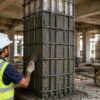
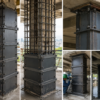
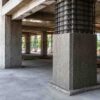
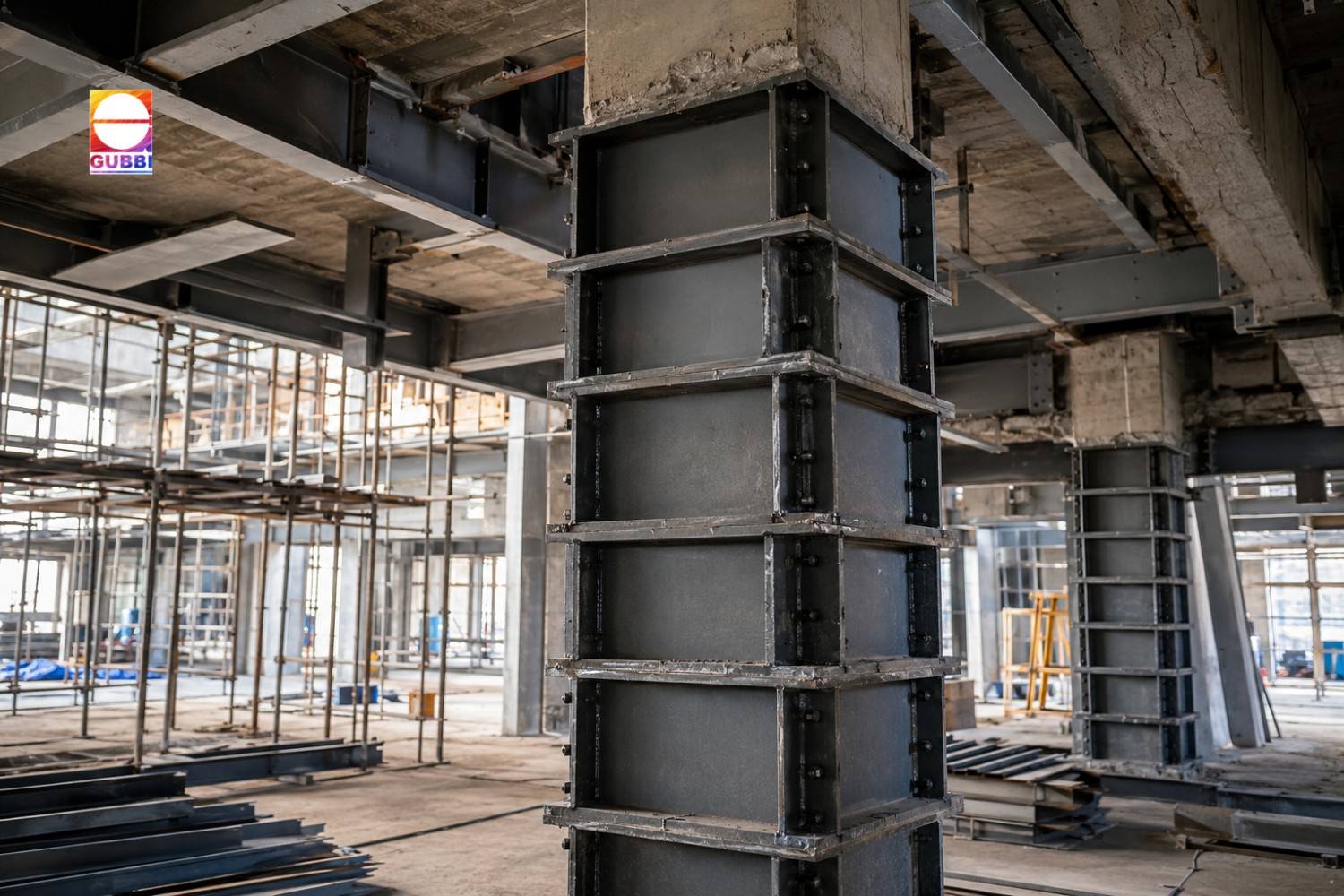
Through Steel Jacketing, steel plates, angles, channels, or fabricated steel sections are installed around the existing reinforced concrete column. The jacket acts as an external confinement system that restrains the lateral expansion of concrete under compression. This confinement effect increases concrete strength while allowing the member to sustain larger deformations before failure.
During seismic loading, the jacket helps maintain integrity of the concrete core, reduces the likelihood of shear failure, and improves post-yield behavior. As a result, the retrofitted column demonstrates superior energy absorption characteristics and enhanced earthquake resistance.
Steel Jacketing of Column for Deficient Existing Structures
Structural assessments frequently identify columns exhibiting one or more of the following deficiencies:
- Low concrete strength
- Corrosion-induced deterioration
- Inadequate transverse reinforcement
- Insufficient axial load capacity
- Seismic detailing deficiencies
- Increased loading due to building modifications
- Change in occupancy requirements
- Vertical expansion of existing structures
For such conditions, Column Jacketing Services offers a practical strengthening solution that can often be implemented with minimal interruption to facility operations. The technique is particularly advantageous in industrial plants, commercial buildings, hospitals, educational facilities, and infrastructure structures where shutdown periods must be minimized.
Advantages of Steel Jacketing of Column Over Alternative Strengthening Methods
While multiple retrofitting techniques are available, engineers often select Steel Jacketing of Column when substantial structural enhancement is required.
Key advantages of Steel Jacketing include:
- Significant increase in axial and shear capacity
- Proven performance in seismic rehabilitation projects
- Immediate structural contribution after installation
- High confinement efficiency
- Suitability for heavily loaded columns
- Compatibility with existing concrete structures
- Reduced demolition requirements
- Reliable performance under cyclic loading
These benefits make steel jacketing of columns particularly suitable for structures located in moderate to high seismic zones.
Steel Jacketing of Column Applications in Seismic Retrofitting Projects
Steel Jacketing of Column is extensively utilized across various rehabilitation projects, including:
- Multi-storey residential buildings
- Commercial complexes
- Industrial facilities
- Hospitals and healthcare infrastructure
- Educational institutions
- Parking structures
- Bridges and transportation infrastructure
- Heritage structures requiring structural upgrading
In many seismic strengthening programs, column jacketing serves as a critical component of an integrated rehabilitation strategy involving beam strengthening, joint enhancement, foundation upgrades, and lateral force-resisting system improvements.
Conclusion
Steel Jacketing of Column continues to play a vital role in seismic retrofitting of buildings by transforming vulnerable reinforced concrete columns into stronger, more ductile, and more resilient structural elements. As building owners increasingly prioritize seismic safety, the demand for technically sound strengthening solutions continues to grow. Through enhanced confinement, improved load-carrying capacity, and superior energy dissipation characteristics, Steel Jacketing remains one of the most reliable methods available for extending structural service life and improving earthquake performance.
For structures exhibiting seismic deficiencies, professional assessment and properly engineered steel jacketing retrofitting solutions can significantly reduce vulnerability while ensuring compliance with modern performance expectations and rehabilitation objectives.